Most men don't spend much time thinking about their pelvic floor. In fact, many don't even realize they have one! But just like women, men have a group of muscles at the base of their pelvis that plays an important role in bladder and bowel control, sexual function, and overall pelvic health.
When these muscles aren't functioning optimally, men can experience a variety of symptoms that affect their comfort, confidence, and quality of life.
The good news? Pelvic floor physical therapy isn't just for women. It can be an incredibly valuable treatment option for men experiencing bladder leakage, urinary urgency or frequency, constipation, pelvic pain, erectile or ejaculatory dysfunction, or changes following prostate surgery.
What Is the Pelvic Floor and What Does It Do in Men?
The pelvic floor is a group of muscles that lie at the base of the pelvis and span from the pubic bone, in the front, to the tailbone, in the back. They support the bladder, prostate, and rectum, while helping to control release of urine and stool at appropriate times. These muscle are important for sexual function, including erections and ejaculation.
The pelvic floor muscles coordinate with other parts of your body and must be able to contract and relax at specific times. This is why simply strengthening these muscles isn’t always the answer. They need proper function. Sometimes this means the pelvic floor is too tight can’t relax, while at other times the problem is with the coordination of the muscles. This can affect men of all ages and is not exclusive to older populations. Pelvic floor therapy, therefore is complex and requires an in-depth evaluation of the issue rather than a universal prescription of kegels for men.
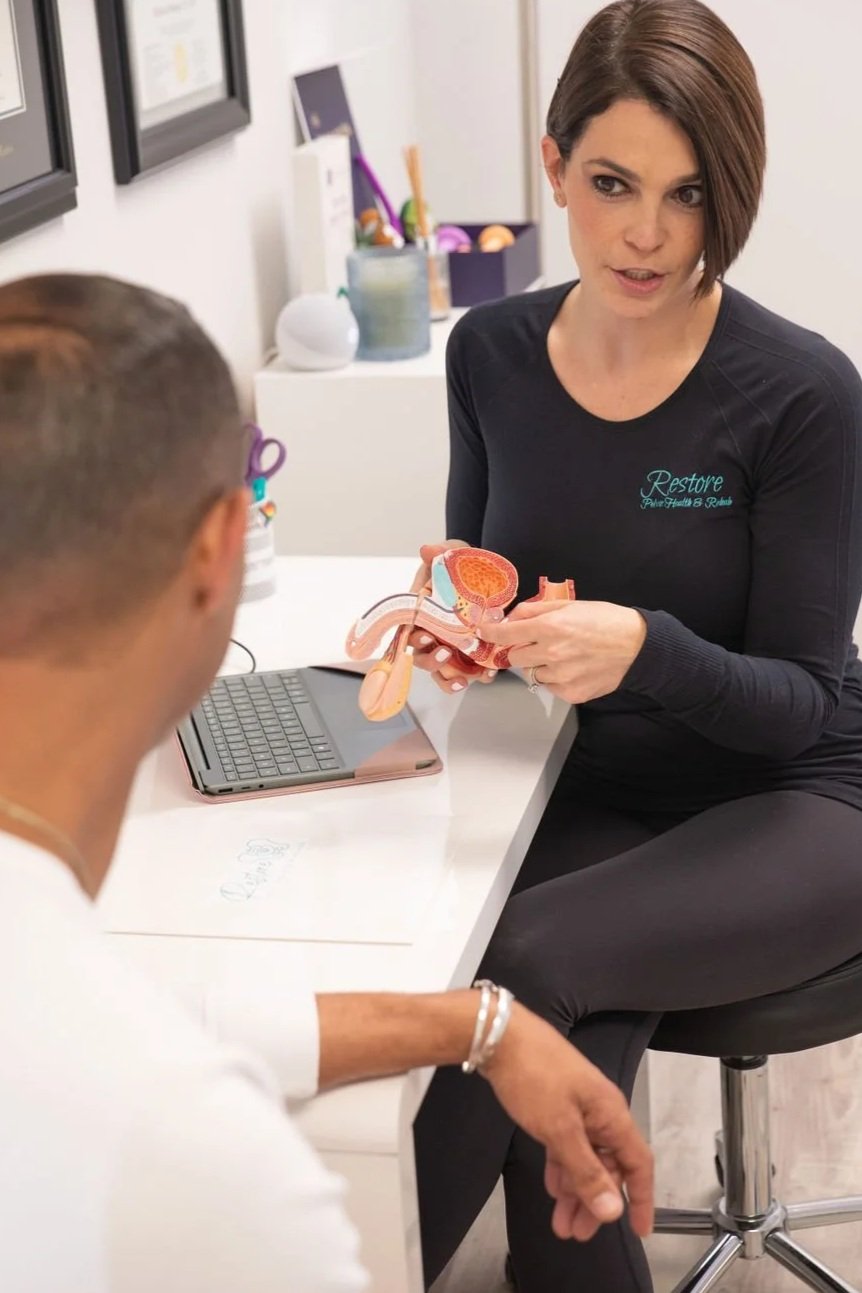
Common Symptoms That May Indicate a Pelvic Floor Problem
Let’s take a look at some common reasons why men benefit from pelvic floor therapy.
Bladder Symptoms
A number of bladder symptoms can be addressed pelvic floor therapy such as:
Urinary leakage or dribbling, including after urination.
Difficulty starting or maintaining a urine stream.
Feeling like the bladder doesn't empty completely.
Frequent urination or urgency.
Waking multiple times throughout the night to urinate.
Difficulty controlling urine when coughing, sneezing, lifting, or exercising.
There can be several causes to these symptoms, including prostate enlargement, changes following prostate treatment, bladder dysfunction, or lifestyle habits with toileting and drinking. When the prostate or bladder are the underlying issue, the pelvic floor can secondarily become affected and contribute further to these symptoms. This is why pelvic floor therapy, in conjunction with management by a urologist, is sometimes the right combination for men.
Bowel Symptoms
Common bowel symptoms pelvic floor therapists work with include:
Constipation or difficulty passing stool.
Straining excessively during bowel movements.
Feeling like you haven't completely emptied your bowels.
Difficulty relaxing the muscles to have a bowel movement.
Rectal or pelvic discomfort; Feeling like you’re sitting on a golf ball.
A sensation of pressure or difficulty coordinating the muscles during elimination.
Incontinence of stool or excessive wiping.
During a bowel movement, the pelvic floor muscles must coordinate to relax and stretch for stool to pass through. Sometimes the muscles are too tight or contract instead of relaxing. One’s sensation or perception of what happening down there can also contribute to symptoms if altered.
Sexual Health Symptoms
Pelvic floor muscles contribute to sexual function, blood flow regulation, and the mechanics of erections and ejaculation. Muscle tension, weakness, poor coordination, and other contributing factors may affect sexual function.
Erectile dysfunction or difficulty maintaining an erection.
Pain with erections or ejaculation.
Pain in the perineum/taint/grundle (the area between the scrotum and anus).
Pain at the tip of the penis.
Pain during or after sexual activity.
Premature or delayed ejaculation.
Reduced confidence related to pelvic or sexual symptoms.
Importantly, erectile dysfunction can have vascular, hormonal, neurological, medication-related, and psychological causes, too. Pelvic floor PT can be one part of a comprehensive treatment approach.
Prehab and Rehab from Prostate Cancer Surgery
Penile rehab is a hugely important part of successful recovery after prostate cancer surgery. After a prostate is removed, it’s very common for men to experience bladder leakage and erectile dysfunction. Being prepared ahead of surgery and armed with the tools to rehab afterwards can make all of the difference during uncertain times.
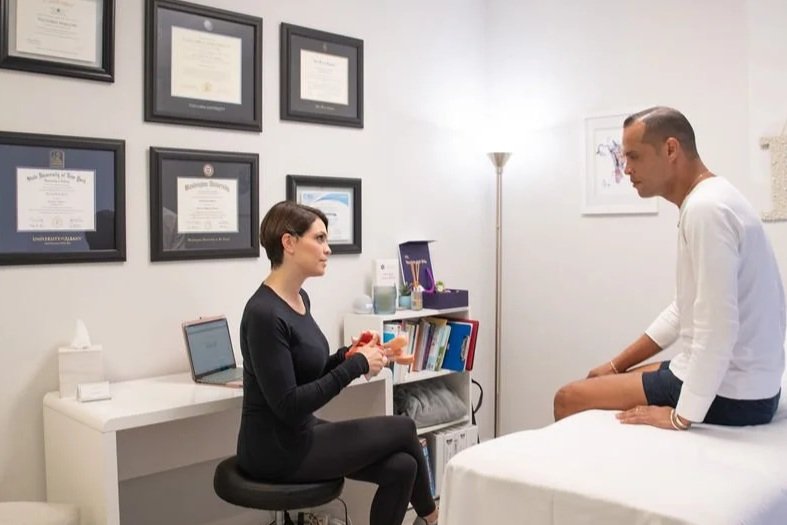
How Can Pelvic Floor Physical Therapy Help Men?
Understanding Your Symptoms
Treatment begins with understanding your symptoms through a comprehensive evaluation. An evaluation may include:
Review of bladder, bowel, and sexual health concerns.
Assessment of posture, breathing patterns, abdominal and hip/ankle mobility, and movement mechanics.
Evaluation of pelvic floor muscle strength, coordination, endurance, and ability to relax.
Assessment of contributing factors such as muscle tension, weakness, or poor coordination.
An internal pelvic floor examination, when appropriate, with patient consent.
An internal examination is not automatically required. Treatment is individualized, and patients should feel comfortable asking questions and discussing their preferences.
Improving Pelvic Floor Muscle Coordination
Depending on findings from the evaluation, therapy may focus on:
Improving pelvic floor strength and endurance.
Learning to relax and lengthen overactive muscles.
Improving coordination during urination and bowel movements.
Developing better control of the muscles during physical activity.
Improving the relationship between breathing, abdominal pressure, and pelvic floor function.
Addressing contributing factors throughout the body is also crucial, because the pelvic floor muscles don’t function in isolation. Patients may also need:
Hip and lower back mobility.
Abdominal muscle function.
Breathing mechanics.
Posture and movement patterns.
Nervous system regulation and stress-related muscle tension.
Daily habits that contribute to bladder and bowel symptoms.
Building Confidence in Everyday Activities
The goal isn't simply to improve what happens during a therapy session. It's to help men return to the activities they enjoy with greater comfort and confidence. Examples include:
Exercising without worrying about urinary leakage.
Sitting comfortably without pelvic pain.
Having bowel movements without excessive straining.
Returning to intimacy with less discomfort.
Feeling more confident following prostate surgery.
You Don't Have to Live With These Symptoms
Pelvic floor problems aren't exclusive to women, and pelvic health isn't something men should overlook.
Whether you're dealing with urinary leakage, difficulty emptying your bowels, pelvic pain, erectile dysfunction, or preparing for prostate cancer surgery, pelvic floor physical therapy may offer solutions that help improve your comfort, function, and quality of life.
At Restore Pelvic Health & Rehab, we take a comprehensive, individualized approach to pelvic floor physical therapy. Our goal is to understand what's contributing to your symptoms and create a treatment plan that supports your goals, comfort, and long-term health.
Ready to take the next step?
If you’re local to Delray Beach, Florida or the surrounding areas, consider schedule an evaluation at Restore Pelvic Health & Rehab to learn whether pelvic floor physical therapy may be right for you.
📆Schedule a Pelvic Floor Evaluation📆
Next On Your Reading List…
What a Trauma-Informed Pelvic Floor Therapy Session Looks Like (and why it’s so essential)